Our website uses cookies in order to be able to offer the best possible functionality. By using the website you agree to the use of cookies. More information can be found here.
Argentina (English)
Australia (English)
Austria (English)
Belgium (English)
Brazil (English)
China (English)
Denmark (English)
Egypt (English)
Finland (Suomi)
France (English)
Germany (Deutsch)
Greece (English)
India (English)
Ireland (English)
Italy (English)
Japan (English)
Korea (English)
Netherlands (English)
Peru (English)
Poland (English)
Portugal (English)
Romania (English)
Singapore (English)
South Africa (English)
Spain (English)
Sweden (Svenska)
Switzerland (English)
Turkey (English)
United Arab Emirates (English)
United Kingdom (English)
Venezuela (English)
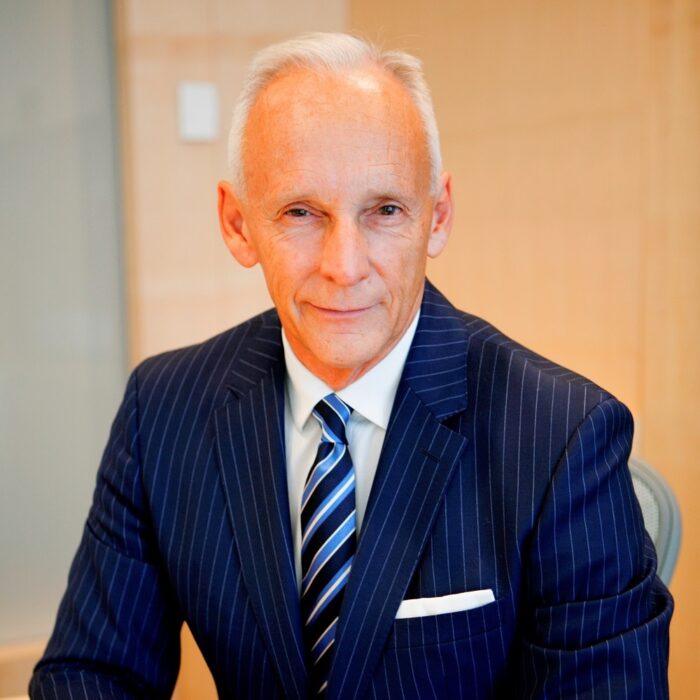
Stephen Lennard is the Managing Partner and founding Principal at Lennard Partners. He is widely acknowledged as one of Australia’s leading Board and Executive Search experts. Stephen is a safe pair of hands. He delivers. Earlier in his career,...
Leadership used to feel simpler. Authority was clearer, and decisions rested in the hands of a few. Do we still need a hero at the helm, or is leadership becoming a collective capability?
For decades, leadership tradition has celebrated the decisive individual: the bold executive who moves quickly, takes risks, and reshapes industries through force of will. Those in leadership have been seen as heroes, deemed capable of making the defining call when the stakes are highest.
Yet recent events have exposed the limits of that model. Consider the turbulence surrounding Elon Musk’s takeover of Twitter, later rebranded as X. Rapid changes to platform policy, branding, and governance were followed by advertiser pullbacks and regulatory scrutiny. Major brands paused spending, and the company faced growing pressure as concerns mounted around brand safety, content moderation, and corporate oversight.
Stephen Lennard, Managing Partner at Signium in Australia, comments:
“It’s not that bold leadership has lost its value. Rather, the idea of the solitary ‘hero leader’ is beginning to feel outdated. The challenges leaders face are too complex, and the consequences too far-reaching. Such expectations can’t be carried by one person alone.”
Today’s leaders operate in an environment where corporate decisions are instantly visible, often politically charged, and deeply intertwined with societal expectations. “It’s no longer enough to act with authority,” says Lennard. “What now differentiates effective executives is their ability to combine decisiveness with stewardship, diplomacy, ethical discipline, and – perhaps most of all – humility.”
In other words, today’s organizations need responsible leadership. More than merely a moral aspiration, responsible leadership is becoming a measurable executive competency. When effectively incorporated, responsible leadership protects enterprise value, reduces regulatory and reputational risk, and strengthens leadership pipelines.
The heroic leadership model remains deeply embedded in business culture. Yet in today’s complex operating environment, it also exposes several structural weaknesses.
Modern organizations operate within interconnected ecosystems rather than isolated markets. Supply chain decisions can carry geopolitical implications. Technology deployments may raise questions about privacy, ethics, or regulatory oversight.
No individual leader, regardless of experience or capability, can fully grasp every dimension of these issues alone.
When too much authority is concentrated at the top of an organization, decision-making can become narrower. Leaders may feel pressure to project certainty, while teams hesitate to challenge assumptions or raise concerns.
Over time, this dynamic can suppress valuable insight from across the organization, allowing risks or blind spots to go unnoticed.
Leadership today is judged not only by results, but also by how decisions are made and communicated. Stakeholders expect transparency, accountability, and responsible conduct toward employees, communities, and the environment.
“Recognizing these limitations is the first step,” says Lennard. “The next important question for organizations is what effective leadership looks like in practice, and what capabilities leaders need to develop.”
Several structural forces are shifting expectations of corporate leadership. Lennard elaborates: “These are not abstract ideals or personality traits. Real changes in the business environment are reshaping what leadership requires. If we want to understand responsible leadership, we first need to understand the structural pressures that are driving it.”
Investor stewardship is raising the bar
Investors are placing greater emphasis on governance and stewardship. Asset managers view leadership behavior as a risk factor that can influence long-term value creation. Annual letters from executives such as Larry Fink of BlackRock have repeatedly emphasized the importance of responsible corporate conduct and sustained stakeholder trust.
In his annual letters to CEOs, Larry Fink has stressed that companies must look beyond short-term financial results and consider how their decisions affect employees, customers, communities, and the broader economy. He argues that long-term value is built on trust and responsible corporate conduct. For leadership teams, this reinforces a clear message: stewardship and accountability are core elements of sound strategy, not optional considerations.
Regulation is moving into the boardroom
Regulators are scrutinizing corporate conduct more closely across sectors, from financial services and technology to environmental governance. Leadership decisions now carry regulatory implications that can reshape market access, operational freedom, and long-term strategic options.
Reputation now moves at digital speed
Reputational exposure has accelerated dramatically. In a digital environment where corporate actions are visible almost instantly, leadership missteps can trigger rapid public backlash, media attention, and investor concern.
The window for managing reputational risk has also narrowed. What once unfolded over weeks now develops within hours, leaving little time for organizations to shape the narrative. Leaders must therefore approach decisions with a heightened awareness of how actions may be interpreted by external stakeholders.
Talent is choosing values as well as employers
Workforce expectations are evolving. Research from organizations such as McKinsey & Company suggests that more people are choosing to work for organizations whose leadership demonstrates transparency, purpose, and ethical consistency.
Together, these pressures are changing the criteria by which leadership success is judged. “Performance still matters,” comments Lennard. “But the ability to sustain trust across multiple stakeholder groups has become equally important – maybe even more so.”
Responsible leadership can be understood through three observable dimensions. These competencies translate ethical intention into practical leadership behavior.
1. Political diplomacy and relational authority
Modern corporations operate within complex networks of regulators, policymakers, civil society groups, and industry bodies. Responsible leaders build relationships that allow them to engage constructively across these groups.
A notable example is Microsoft’s proactive engagement with policymakers on artificial intelligence governance. Rather than resisting regulation outright, the company has participated in discussions on AI safety standards and governance frameworks, contributing to policy conversations and helping shape industry practices.
Lennard comments, saying, “When leaders engage constructively with regulators, they build credibility and create room for responsible innovation.”
2. Ethical consistency
Responsible leadership also requires consistency between corporate values and the incentives that guide behavior inside the organization.
Few examples illustrate this more clearly than the reforms introduced at Wells Fargo following its widely reported sales misconduct scandal. Investigations revealed that aggressive sales targets had encouraged unethical behavior across the organization. In response, the company introduced governance reforms designed to strengthen oversight, revise incentive structures, and reinforce accountability.
The lesson for leaders is clear: ethical culture cannot rely on stated values alone. It must be supported by promotion criteria, performance incentives, and visible consequences when standards are broken.
3. Adaptive humility
Complex environments rarely provide perfect information. Leaders who acknowledge uncertainty, welcome challenge, and encourage learning are often better equipped to navigate rapid change. Adaptive humility helps leadership teams spot emerging risks earlier, question assumptions more carefully, and adjust strategy when conditions shift.
“It takes real humility for a leader to admit that a strategy isn’t working or that an unforeseen shift presents a new risk they’re not prepared for,” says Lennard. “There’s no room for stubborn, always-right ego in these situations. Sometimes it’s as simple as welcoming different viewpoints, reviewing decisions, and creating cultures where learning matters as much as certainty.”
Individual leadership behaviors are important, but responsible leadership only becomes fully sustainable when supported by organizational systems. If companies want these capabilities to last beyond a single leader, they need to embed them into how leaders are selected, evaluated, and rewarded.
Several practical steps can help organizations achieve this.
Treat responsibility as a leadership competency
Responsible leadership should be assessed in the same way organizations evaluate strategic thinking or financial performance.
Leadership assessments and executive selection processes can examine how candidates handle complex stakeholder trade-offs, respond to ethical challenges, and engage with regulators or external partners. These behaviors provide clear signals of how leaders will operate when facing difficult decisions.
Include stakeholder perspectives in leadership evaluation
Traditional performance reviews focus heavily on financial results and internal targets, while responsible leadership requires a broader view.
Some organizations now include feedback from employees, customers, regulators, and other stakeholders when evaluating leadership performance. This provides a clearer picture of how leadership decisions affect the wider system around the organization.
Align incentives with responsible behavior
What organizations reward ultimately shapes leadership behavior. Lennard explains: “If incentives focus only on short-term results, leaders may feel pressure to prioritize immediate performance over long-term stability. This often results in short-sighted decisions that quickly get derailed by market changes. When we link executive incentives to long-term value creation and other nonfinancial indicators, we help to reinforce responsible decision-making.”
Create space for difficult leadership conversations
Complex decisions rarely present simple answers, and leaders often need to weigh competing priorities and long-term consequences.
Some organizations are introducing structured forums where leadership teams examine difficult trade-offs before major decisions are finalized. These discussions encourage broader perspectives and strengthen the quality of organizational judgment.
Leadership icon and former South African president Nelson Mandela once offered a powerful image of leadership: “A leader is like a shepherd. He stays behind the flock, letting the most nimble go ahead, whereupon the others follow, not realizing that all along they are being directed from behind.”
“Mandela’s metaphor captures an idea that resonates strongly in today’s business environment,” says Lennard. “The shepherd does not rush ahead, demanding that the flock follow. Instead, he watches carefully, guiding the group while allowing those with the right skills or instincts to move forward and navigate uncertain ground.”
This image reflects a leadership style grounded in trust, judgment, and awareness of the broader system. The leader’s role is not to dominate every decision, but to ensure that the organization moves safely and confidently through complex terrain.
Responsible leadership works in much the same way. It recognizes that effective leadership does not come from a single heroic figure at the front of the organization. It emerges from leaders who listen carefully, share responsibility, and create the conditions for others to contribute their expertise.
Today’s leaders cannot simply command direction. In a world where decisions carry wider consequences and organizations operate under constant scrutiny, the responsible leader guides, coordinates, and stewards the collective intelligence of their organization. Like Mandela’s shepherd, they lead with confidence, but also with humility.