Our website uses cookies in order to be able to offer the best possible functionality. By using the website you agree to the use of cookies. More information can be found here.
Argentina (English)
Australia (English)
Austria (English)
Belgium (English)
Brazil (English)
China (English)
Egypt (English)
Finland (Suomi)
France (English)
Germany (Deutsch)
Greece (English)
India (English)
Ireland (English)
Italy (English)
Japan (English)
Korea (English)
Netherlands (English)
Peru (English)
Poland (English)
Portugal (English)
Romania (English)
Singapore (English)
South Africa (English)
Spain (English)
Sweden (Svenska)
Switzerland (English)
Turkey (English)
United Arab Emirates (English)
United Kingdom (English)
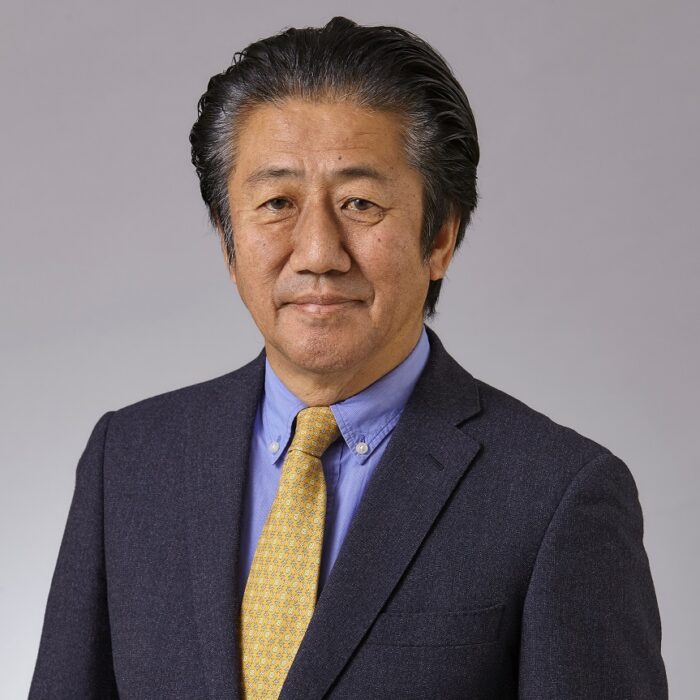
Katsuro Kuroda is Senior Consultant in charge of Life Sciences at Signium Japan. He leverages two decades of business management experience at Takeda Pharmaceuticals in Japan and internationally (Germany, UK, Taiwan, China). He has thirteen years of ...
Long careers with one employer haven’t disappeared, but the conditions that make them attractive are changing. Can organizations create enough movement and opportunities for growth to make staying a compelling path forward?
For much of the twentieth century, building a career often meant joining an organization, developing within a defined function, and progressing through a series of increasingly senior roles. Progression wasn’t always predictable, but the broad direction was clear: upwards. Aptly labeled ‘the career ladder’, people typically advanced their career by accumulating experience, taking on more responsibility, and sometimes relying on the notion that loyalty would be rewarded over time.
That model hasn’t disappeared entirely, but it’s no longer the default path. Organizations are flatter, skills are changing faster, and employees have far greater visibility of opportunities elsewhere.
Yet, this doesn’t mean people have lost interest in building long careers with one employer. The more important question is whether remaining with that employer still allows them to grow.
“Staying with one organization shouldn’t mean staying in one role or following one predetermined path,” says Katsuro Kuroda, Senior Consultant at Signium in Tokyo. He adds:
“A long career can include different functions, markets, projects, and leadership responsibilities. What matters is whether the organization continues to create meaningful opportunities for the individual to develop.”
Career progression is still often associated with promotion: a more senior title, greater authority, and higher pay. Although these are still important, flatter organizational structures mean there are fewer management layers through which employees can steadily advance.
As a result, career development is becoming broader and less linear. For example, an employee in a technical role might explore a variety of options, such as:
Each move builds potential capabilities and widens future options, even when it doesn’t immediately move the person higher on an organizational chart.
This begins to matter more across long working lives. OECD research describes career trajectories as becoming more fluid and diverse as digital change, economic transition, and greater longevity disrupt traditional career paths. The report recognizes that career mobility can happen within an organization, and reinforces the need for employers to give people opportunities to learn, change direction, and take on new kinds of work throughout their careers.
Kuroda emphasizes that the challenge is to make these different forms of progress meaningful. “A lateral move that expands someone’s skills, influence, or future opportunities can be valuable,” he says. “A lateral move that simply adds complexity without development opportunities or appropriate reward may feel like a diversion rather than advancement. In short, many may feel they’re simply being asked to do more work, without any real benefit, and for the same pay.”
Employees cannot pursue opportunities they can’t see. In many organizations, internal careers remain surprisingly difficult to navigate.
Vacancies may be promoted openly in some business units but circulated informally in others, making it harder for employees to know what’s available.
Projects and development assignments may go to employees who are already known to influential managers or senior leaders, rather than those with the strongest potential or fit.
Employees may be told that mobility is encouraged without being shown where they could move or what experience they would need.
By comparison, the external labor market makes opportunity highly visible. A vacancy usually has a title, responsibilities, application process, and clear point of entry. It gives the individual an opportunity to be assessed afresh, rather than through the assumptions attached to their current role.
PwC’s 2024 Global Workforce Hopes & Fears Survey, which included more than 56,000 workers across 50 countries and territories, found that only 46% believed their employer provided adequate opportunities to learn skills that would help their future career. Among employees considering changing employers, 67% said opportunities to learn new skills would substantially influence their decision.
This suggests that employees often leave because they can’t see how staying will prepare them for their next career season. Younger employees may want exposure and faster skill development. Mid-career professionals may be seeking greater responsibility, reinvention, or a route out of a plateau. More experienced employees may want to apply their knowledge differently, mentor others, move into specialist work, or reshape their role around changing personal priorities.
“The details differ from person to person,” says Kuroda. “But the underlying question is similar: Can I still grow here?”
Many organizations are responding by treating internal mobility more deliberately. Internal talent marketplaces – many of them powered by AI – bring roles, projects, mentorships, learning opportunities, and short-term assignments into one accessible system. Rather than relying only on a manager or HR team to identify candidates, employees can explore opportunities based on their skills, interests, and career ambitions.
This helps organizations uncover capability right there within their ranks, while allowing employees to test a new area through a project or temporary assignment before making a permanent move. Yet, formal internal marketplaces remain far from universal. LinkedIn reports that only 33% of organizations offer formal internal mobility programs, while only one in five employees felt confident in their ability to make an internal move.
Schneider Electric is one organization that has attempted to close this gap through its Open Talent Market. The AI-supported talent platform connects employees with full-time positions, part-time projects, mentors, and personalized learning opportunities based on their profiles and ambitions. It gives employees a clearer view of possibilities beyond their immediate role or business unit.
Kuroda suggests that the technology is useful, but it’s not the whole solution, saying, “A platform can reveal an opportunity. It can’t guarantee that an employee will have the time, confidence, or organizational support to pursue it. That still needs a human touch – leaders and mentors who take a genuine interest in where people want to go.”
Internal mobility only succeeds when employees believe the process is real. Publishing opportunities is a start, but employees also need to trust how those opportunities are allocated and supported.
1. The process is fair
Employees will disengage if roles appear to have been promised in advance, external candidates are consistently favored, or applying creates tension with their manager. They need clear selection criteria, honest feedback, and evidence that people are genuinely moving across functions, geographies, and career tracks.
2. Development leads somewhere
Project work loses its value when employees are expected to complete it on top of an already full workload, with no recognition or connection to future progression. Internal opportunities must help people build experience that the organization recognizes and can translate into future roles.
3. Access is as fair as possible
Opportunities can appear open while still favoring employees with stronger networks, more supportive managers, or greater freedom to take on additional work. Remote employees, primary caregivers, people in smaller markets, and those whose achievements are less visible may face additional barriers.
Organizations may not be able to remove every constraint, but they should examine who is able to participate, where access is uneven, and what support could make opportunities more reachable.
4. The technology uses reliable information
Skills-based matching technology can widen access, but only when the information behind it is accurate. If past opportunities have been distributed unevenly, the platform may continue favoring the same kinds of employees, even though its recommendations appear objective.
Organizations must look beyond how many opportunities the platform advertises. They also need to examine who sees them, who applies, who is selected, and whether those opportunities lead to meaningful progression. These patterns can reveal whether the system is widening access or simply reinforcing existing advantages.
One of the greatest barriers to internal progression is also one of the most understandable: managers don’t want to lose strong people.
From the manager’s perspective, an internal move creates immediate disruption. Knowledge leaves the team, performance may suffer, and a replacement must be found and developed. The wider organization retains the employee, but the current manager absorbs much of the short-term cost.
“If managers are expected to develop people but are only rewarded for keeping their own team productive, they may hesitate to support internal movement,” says Kuroda. “Organizations must make it clear that developing someone who progresses elsewhere is a leadership success, not a loss. Strong managers let good people grow, and let them go.”
How can organizations encourage this?
Without collaborative support from leaders and the organization as a whole, internal progression may be encouraged in theory but blocked in practice. A manager who holds tightly to strong employees may protect current performance. Over time, however, the organization risks losing those employees altogether.
Younger employees are often described as less loyal because they tend to change jobs more frequently, but job movement and loyalty are not the same thing.
The reasons people stay or leave also change over time. Early-career employees are still building experience, testing where they fit, and deciding what kind of work they want to pursue. Moving may be part of that process, rather than evidence that they’re unwilling to commit to a company.
The more useful question is not which generation is most loyal. It’s whether employees at every stage can still see a meaningful future inside the organization.
Younger employees may need exposure. Mid-career employees may need renewal. More experienced employees may need flexibility or a different way to contribute. Developing clearer internal pathways allows organizations to support all three.
Japan offers a valuable perspective because its traditional employment model has long been associated with careers built inside one company.
In large Japanese organizations, long-term employment has often included company-funded development, internal rotation, movement between departments, and the gradual accumulation of broad institutional knowledge. Employees could remain with the same employer while gaining experience across different functions and locations.
This demonstrates that organizational continuity doesn’t have to mean occupational immobility.
However, traditional internal movement in Japan has often been directed primarily by the organization. Employees may be moved according to business needs, with limited transparency or personal choice. Seniority-based progression can also make it harder to recognize people whose skills have grown quickly or whose careers have taken a less traditional path.
“Japan has a strong tradition of developing people over many years, and there’s real value in that long-term commitment,” says Kuroda. “But more employees want to understand their options and have a say in how their careers develop. The challenge is to keep the benefits of a long career with one organization while giving people more choice over where they go next.”
A compelling internal pathway doesn’t require constant career leaps. The aim is less about replacing the old career ladder with permanent reinvention, and more about giving people credible ways to keep progressing.
Some employees want to deepen their expertise, remain close to work they enjoy, or build stability around the rest of their lives. Growth can mean greater mastery, influence, recognition, or contribution, even without a major change of role.
So, can someone still build a career in one organization?
Yes – but that career is less likely to follow one predictable route, and it can no longer depend on the assumption that loyalty will eventually be rewarded. Employees need to be able to see how staying will help them grow and remain relevant. Kuroda concludes:
“Organizations can’t assume that tenure will make staying attractive. “They need to show people that there’s still a future for them inside the business – and make that future visible, credible, and worth choosing. A long career with one employer remains possible, but only when staying continues to feel like moving forward.”