Our website uses cookies in order to be able to offer the best possible functionality. By using the website you agree to the use of cookies. More information can be found here.
Argentina (English)
Australia (English)
Austria (English)
Belgium (English)
Brazil (English)
China (English)
Denmark (English)
Egypt (English)
Finland (Suomi)
France (English)
Germany (Deutsch)
Greece (English)
India (English)
Ireland (English)
Italy (English)
Japan (English)
Korea (English)
Netherlands (English)
Peru (English)
Poland (English)
Portugal (English)
Romania (English)
Singapore (English)
South Africa (English)
Spain (English)
Sweden (Svenska)
Switzerland (English)
Turkey (English)
United Arab Emirates (English)
United Kingdom (English)
Venezuela (English)
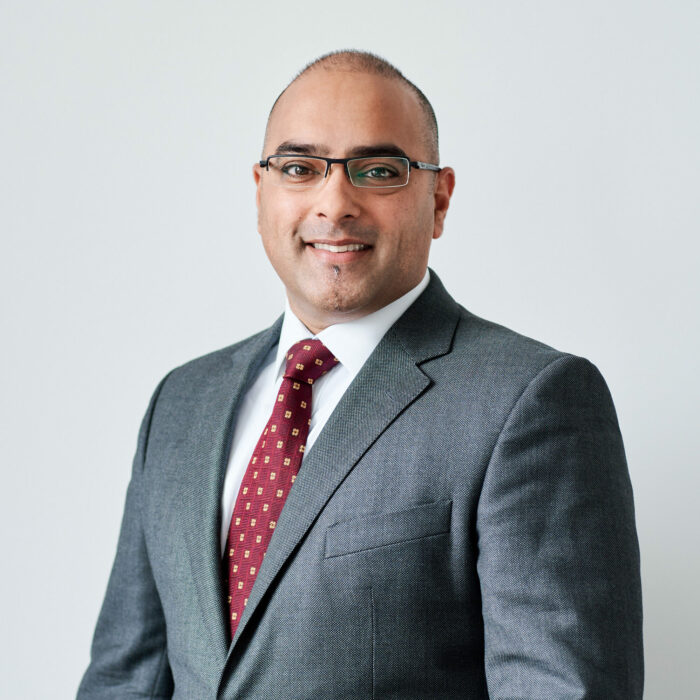
Umair Safdar ist Managing Partner bei Signium am Standort Düsseldorf. Mit 20 Jahren Erfahrung im Executive Search baute sich Umair einen nachhaltigen Klientenstamm in der Industrie und in FMCG auf, wobei er sich auf Führungspositionen in den Berei...
Planning cycles are shrinking. Markets are shifting faster. Political and economic conditions can change within a quarter. What kind of leadership is needed with so much uncertainty on every horizon?
For many executives today, clarity beyond the next two or three quarters is limited, almost unheard of. Although long-term vision still matters, most leaders are being forced to operate within compressed time horizons, where decisions must be made with incomplete information and moving targets.
In this volatile environment, three capabilities consistently distinguish resilient leadership from reactive management: the ability to think faster, see further, and explore wider. “These may look and sound like classic clichés,” says Umair Safdar, Managing Partner at Signium in Dusseldorf. “But they are genuine and practical leadership disciplines needed to navigate the unprecedented demands facing all leaders today.”
Thinking faster doesn’t mean acting impulsively. It means shortening the cycle between insight and adjustment that then allows you to take the decision to drive the required action. The challenge is maintaining momentum without stepping outside the guardrails of company values and strategy.
When team members feel safe and empowered to speak up and share differing views without fear of negative consequences, critical insights and diverse solutions emerge sooner. Research shows that psychological safety – the shared belief that interpersonal risk-taking is acceptable – supports healthy debate and is linked with improved decision-making and performance.
The leaders who move quickly are not necessarily the most forceful personalities in the room. Rather, they’re the ones who build environments where information flows freely and challenge is encouraged. Boris Katic, COO of Häfele SE, makes a profound statement: “You learn through the eyes of people you trust. Being challenged is not an ego thing; it’s a learning experience for the company’s benefit. Give your people your trust, and they will give you the business insights that you are missing.”
By contrast, ego and emotional attachment can slow an organization down. When leaders focus on defending their views rather than examining and testing them, constructive discussions stall, decisions take longer, and, in many cases, opportunities pass.
“Strong leadership is almost invisible,” says Safdar. “When teams function well and ownership is shared, the leader’s presence is steady but not dominating. Influence becomes quieter, but more effective.”
“You can hire a decisive, quick-thinking COO,” Safdar continues. “But if the organization is political, risk-averse, or unsafe for shared opinions, even the most capable leader will struggle to move quickly. Embedding fast thinking requires team-wide psychological safety, clarity about who decides what, and a shared understanding that getting it right matters more than simply appearing right.”
Seeing further doesn’t mean predicting the future with certainty. It means identifying signals early and preparing for plausible disruption.
As an example, an organization heavily dependent on a single external funding source began asking difficult questions: What happens if this funding changes? What if geopolitical or policy shifts alter the landscape? Rather than waiting for disruption, leadership deliberately diversified funding streams and reduced dependency on a single source. As a result, when external conditions shifted, the organization was prepared.
Foresight is often misunderstood as long-range forecasting, a type of corporate wizardry. In practice, it’s closer to highly disciplined risk awareness. It requires leaders to examine vulnerabilities, such as supplier concentration, geographic exposure, or regulatory changes, and stress-test them regularly.
Scenario planning can begin with structured “what if” conversations held consistently. What if demand drops by 20 percent? What if a major market becomes restricted? What if a key technology shifts faster than expected? The goal is not to eliminate uncertainty, but to understand how the organization would respond under different conditions, and where resilience or opportunity may exist.
“Seeing further means seeking out ways to create flexibility and resilience, before crises hit,” says Safdar. “It’s far easier to make sound adjustments to decisions while conditions are still manageable.”
Exploring wider begins with expanding the range of viewpoints around the table. “The deeper issue is cognitive diversity,” says Safdar. “It extends beyond demographic categories. Diversity is the inclusion of different thinking styles, problem-solving approaches, and professional backgrounds.”
Organizations perform better when leaders surround themselves with complementary strengths:
Paul Wanless, Global Commercial Director for CVH Spirits, elaborates: “The greatest power in diversity is recognizing and utilizing each member’s strengths, and giving everyone in the team a strong and equal voice. Diversity begins at the ground stage when recruiting – make sure you build a team that complements each other, and remember that as a leader, you cannot be the smartest person in the room!”
Leaders can use diversity to widen the lens without losing coherence. One analogy often used is that of multiple people describing different parts of the same object, where each perspective is technically correct, but incomplete on its own. The leader’s role is to integrate those perspectives into a coherent picture. That integration becomes possible when teams share core values, the common ground that allows different viewpoints to align around a shared purpose.
“Exploring wider also demands humility,” continues Safdar. “Strong leaders recognize that they do not see the full landscape alone. Even if it’s uncomfortable, they invite differing perspectives to compare with their own.”
“Tomorrow’s leaders must be curious and have an open mindset,” adds Rene Meldem, ex-CHRO of Cavotec. “Fear stops people from exploring. How can leaders balance the right amount of healthy fear that prevents them from making wild decisions, while exploring the edges of new technology and groundbreaking processes? Curiosity and open-mindedness enable leaders to be confident in their own ability and trust the people on their side.”
Amjad Liaquat, ex-CEO of Mindcurv, adds: “Sometimes in larger organizations, leaders don’t get the option to really build their teams – they develop into being team caretakers. Within an SME/Mittelstand organization, the emphasis is on the leader to really build and nurture their team.” Liaquat also emphasizes that coherence is always the end goal, because a coherent team will always hit their KPI’s and pursue the betterment of the company. A team with a coherent mindset will make impactful decisions that automatically create tangible growth.
Across conversations with senior executives, a consistent profile for tomorrow’s leaders emerges:
Perhaps most importantly, tomorrow’s leaders are anchored in human values that provide stability in volatile environments. Safdar explains: “They prioritize integrity and the long-term greater good for society and people, over and above profit. These are the leaders who build trust, internally and externally – the kind of trust that stands the test of time, and personally, gives me hope for the future.”
The coming years will test leaders’ confidence and their ability to create coherence. While little can be done to control external forces of the geopolitical and business world, leaders have the opportunity and responsibility to create organizational structures, teams, and key stakeholder relationships that can endure the future, no matter what it brings.
Safdar emphasizes:
“Tomorrow’s leaders must think faster, see further, and explore wider – with strategy and wisdom. Speed without foresight creates fragility. Foresight without action leads to stagnation. Diversity without shared values becomes noise. But when these capabilities are aligned, organizations gain something far greater than immediate profit. They gain durability and trust, and today, that’s what every business needs more of.”